



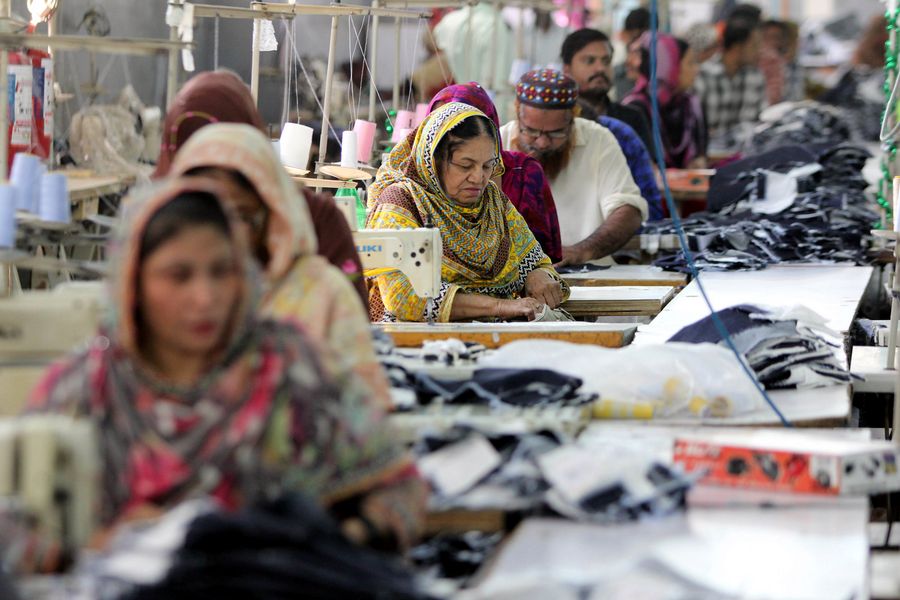
Laborers work in a garment factory in southern Pakistani port city of Karachi on Nov. 27, 2019. (Str/Xinhua)
China can greatly help modernize Pakistan's textile industry and reduce trade barriers between the two countries which will ultimately boost the export of textile products from Pakistan, said a Pakistani textile entrepreneur.
by Raheela Nazir
ISLAMABAD, Jan. 3 (Xinhua) -- According to the Pakistani government, the textile industry contributes nearly 60 percent to the country's total exports, rendering it the major industrial sector of Pakistan which plays an important role in the economic growth of the country.
In addition to the export, the textile sector has also been serving the local population of about 200 million people. Being a labor-intensive industry, it offers entry-level jobs for unskilled labor, especially in the clothing sector which has been particularly suitable for female workers.
Nevertheless, Pakistani industrialists argue that the textile industry of Pakistan faces challenges including lack of product and process innovation and difficulty in obtaining financing for new facilities, looking forward to investment from and collaboration with China to boost the export of textile products and modernize the growing textile industry.
Muhammad Amjad Baig, a textile entrepreneur and chief executive officer of Lead International, a consulting and trading company, told Xinhua that China can greatly help modernize Pakistan's textile industry and reduce trade barriers between the two countries which will ultimately boost the export of textile products from Pakistan.
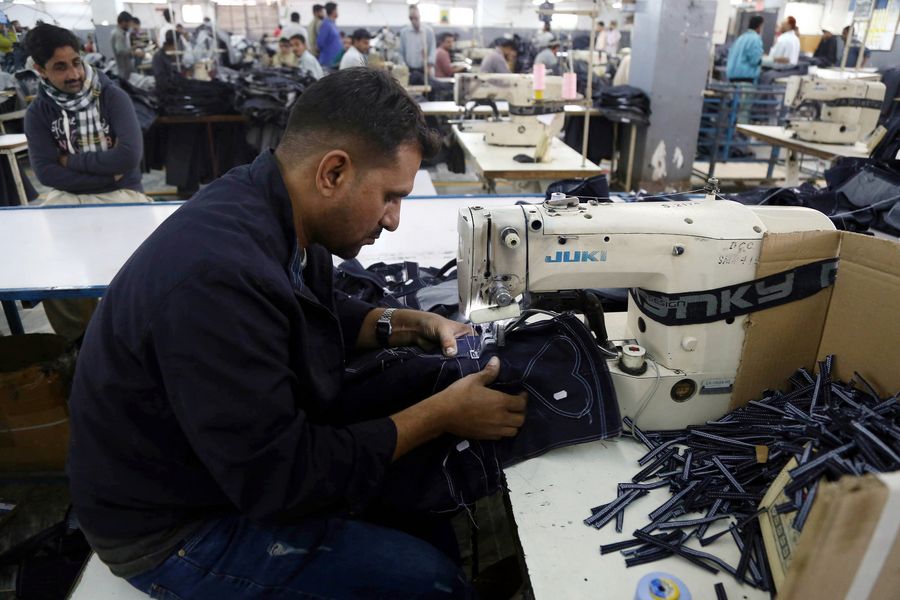
Laborers work in a garment factory in southern Pakistani port city of Karachi on Nov. 27, 2019.(Str/Xinhua)
"Lack of product and process innovation, heavy reliance on local and traditional raw materials and technologies, leadership and management skill gaps, compliance issues as perceived by international buyers, high cost of capital and difficulty in obtaining financing for new facilities are some of the major problems the textile industry of Pakistan is grappling with," Baig said.
The entrepreneur said Chinese companies can bring technology and higher skills with them which would improve the productivity and efficiency of the textile sector which largely lacks technically skilled labor and supervisory staff.
"The two countries need to collaborate and develop corporate and strategic alliances for different parts of supply chain integration," he said.
Pakistan exports a wide range of items including raw cotton, cotton fabric, cotton yarn and thread, knitwear, bedwear, woollen carpets and rugs, garments, towels and tents, and there are different sub-sectors within the textile industry including spinning, weaving, processing and stitching.
Despite a slowdown in recent years due to multiple factors including the depreciation of the Pakistani rupee, a substantial recovery has been witnessed in the last two years mainly due to the incumbent government's support and viable policies forged to make the country's textile industry on a par with regional and other competitors.
According to the latest data released by the Pakistan Bureau of Statistics (PBS), the export of textile products has increased 2.43 percent in the first quarter of the 2019-2020 fiscal year (July 1-June 30) as compared to the previous year. The figures from the PBS showed that textile worth 3.37 billion U.S. dollars was exported during the period from July to September 2019 as compared to the amount of exports of 3.29 billion U.S. dollars in the corresponding period of the last fiscal year.
The government has taken special measures to encourage industrialization and export, and the business scenario is changing swiftly in the country.
All Pakistan Textile Mills Association, in collaboration with the government, is in process of formulating a long-term textile policy to set the direction for the sustainable development of Pakistan's textile sector. Textile experts in Pakistan envisaged 100 percent increase in textile products export to 26 billion U.S. dollars in the next five years.
In a conversation with Xinhua, Ehsan Ali Malik, a renowned businessperson and chief executive officer of the Pakistan Business Council, said the Chinese textile companies lead the textiles trade globally.
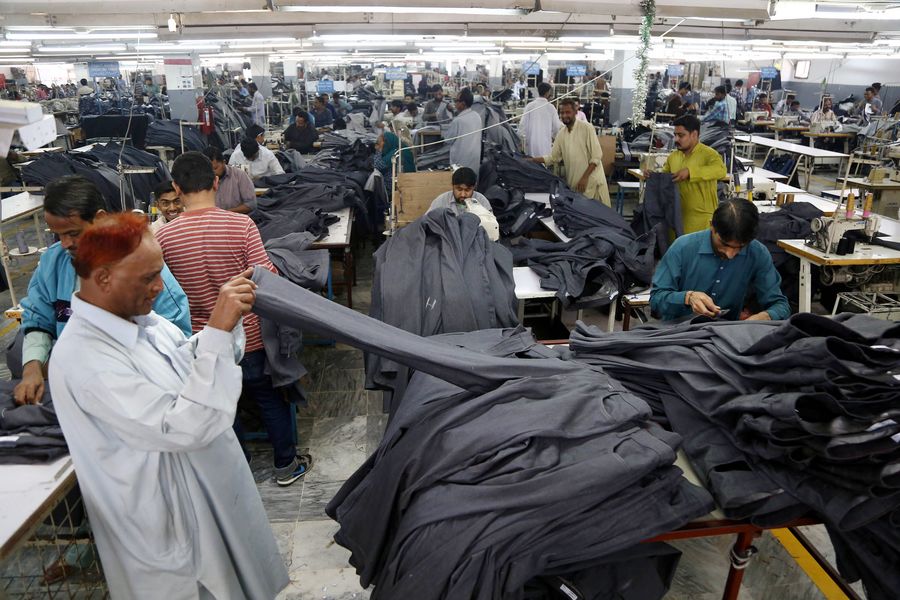
Laborers work in a garment factory in southern Pakistani port city of Karachi on Nov. 27, 2019.(Str/Xinhua)
He said the Pakistani government should make viable efforts and policies to attract Chinese enterprises to Pakistan so that they do not turn to other countries in the region for relocation of industries as they are also struggling to attract Chinese companies.
Chairman of Department of Garment Manufacturing of National Textile University Faisalabad Abher Rasheed told Xinhua that Pakistan and China can collaborate in two main areas which are equipment manufacturing and fiber development. China has the capacity in both areas while Pakistan has comparatively cheaper workforce available. Joint ventures in both areas could create a positive impact, he said.
"Capacity building of Pakistan's textile industry may also serve the needs of the Chinese population in the long run," Rasheed added.■