BEIJING, Nov. 18 (Xinhua) -- As a "Toilet Revolution" began to emerge across the nation, students and staff of Jinlong Primary School, located in southwest China's Guizhou Province, were finally freed from using smelly, fly-infested open pit latrines, which they had to endure for years.
In September, when 8-year-old Liu Jiaxin returned to school for the new semester, she saw a set of brand new flush squat toilets.
"I was so surprised and happy," said the third-grader of Jinlong Primary School, who was always afraid of falling into the trench when using the old pit latrines.
Located in Zhijin County, the school is one of the latest beneficiaries of "Water, Sanitation and Hygiene (WASH) in Schools," a program jointly implemented by China's Ministry of Education and UNICEF to provide safe drinking water, improve sanitation facilities and promote hygienic behavior at schools in rural areas of the country's less developed central and western areas.
"Compared with eastern China, central and western China sees lower availability of sanitary toilets. This is closely connected to a higher incidence of diarrhoea and mortality rate of children under five in the region," said Dr. Yang Zhenbo, UNICEF China's specialist of Water, Sanitation and Hygiene.
The WASH in Schools project was firstly kicked off in China in 2006. The third five-year project cycle is from 2016 to 2020, with project schools chosen from six counties in five western provincial-level regions including Xinjiang Uygur Autonomous Region, Chongqing Municipality, Guizhou Province, Guangxi Zhuang Autonomous Region and Yunnan Province.
Jinlong Primary School is among Zhijin's 50 pilot schools. The century-old Yina Primary School was also one of them.
In July 2017, headmaster Luo Qin participated in a training session launched by the program together with representatives from other pilot schools, during which experts from UNICEF and Chinese Center for Disease Control and Prevention (CDC) demonstrated how flies can transfer bacteria from exposed faeces in pit latrines to food.
"I realized then that we must change our toilets," Luo said.
By the end of this year's summer vacation, new sanitary toilets had been installed for over 1,600 students at Luo's school as well as in nine of the other pilot schools. New water free and water saving toilet technology were also piloted in these schools.
SHIFT IN MIND
But after the new semester began, Luo found the new toilets weren't being used properly.
Many students had never used flush toilets before, as not every family in Zhijin can afford one at home. Some students did not flush the toilets, while others obsessed over playing with flush buttons.
"There was one moment when I thought we might as well keep the old pit latrines, which at least did not require the students to flush them or give the school pressure to maintain them," Luo said.
According to Dr. Yang, a true toilet change can be long-winded, and the toilet revolution success depends on not only the new latrine construction, but also the change of social norms and behaviors.
"We must educate the children and help them adopt good habits," he said.
As such, Luo mobilized teachers to write toilet instructions that were later taught in class and displayed in bathrooms, which are now decorated with paintings and flowers. A music teacher even made the instructions into a song that is now known by every student.
Classes of fourth to sixth graders rotate cleaning duties every one or two weeks each semester and students are encouraged to correct their classmates' improper behaviors when using the toilets. "As such, we hope they will learn to treasure the cleaner toilets more," Luo said.
"I have told several students that they were doing the wrong thing when playing with cubicle doors," said Du Chunxi, a fifth-grader. "I'm proud of doing so as now there are less and less of my schoolmates using the toilets in such a wrong way."
The toilet revolution is also taking place in other pilot schools, where teachers help students plant vegetables in a garden with toilet sewage after disposal.
Such school initiatives are also in line with the theme of this year's World Toilet Day, which is to ensure toilets work in harmony with ecosystems "when nature calls." World Toilet Day is a UN observance day that falls on Nov. 19.
"We hope to not only prevent sewage from polluting the environment but also make use of it," Yang said.
"More children are getting used to the new toilets now," said Wang Xinwei, headmaster of Jinlong Primary School.
NEW TOILETS FOR A NEW COUNTRYSIDE
But it's not only students who are expected to be agents of change.
"Actually, many parents didn't know how to correctly use flush toilets as well, so we also invited them to participate in the educational program and we expect the children to bring such knowledge to their families," Luo said.
Schools can play a leading role in the toilet revolution, according to Yang. "Schools are more willing to accept new concepts and ideas, and are important in forming favorable behavior patterns of toilet usage in rural areas."
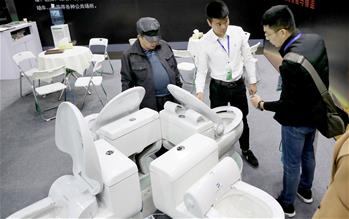
In 2015, the Chinese government also launched its "toilet revolution" to promote sanitation upgrading across the country, complementing national efforts to remarkably improve the rural living environment.
"The toilet revolution is of great value, as toilets are a basic human need that greatly influence people's living quality and concern their dignity," said Tao Yong, a CDC expert on water quality-related technologies in rural areas. "The goals of improving people's wellbeing and protecting the ecological environment can hardly be reached without toilet improvements."
"The cooperation between the Chinese government and UNICEF is bringing more of the UN agency's valuable experiences to China's toilet upgrading, especially in terms of helping change people's mindset," he said.
Program facilitators have also been gaining knowledge from piloting in schools like Yina and Jinlong, and the program is set to be promoted to a wider range of rural areas under the cooperation of the government and UNICEF, according to Yang.
"With China attaching more importance to the toilet revolution and countryside revitalization, it can also spread awareness of the knowledge gained from the program," said Yang.
"We hope to present our experiences in forms of cases and eventually the government can integrate them into related plans or projects for further promotion," he said.